Swiss wealth tax by canton: a guide for new residents
Swiss wealth tax is cantonal only. How it works for new residents, which cantons use a flat rate, and how each canton handles it under the lump sum.
Last reviewed
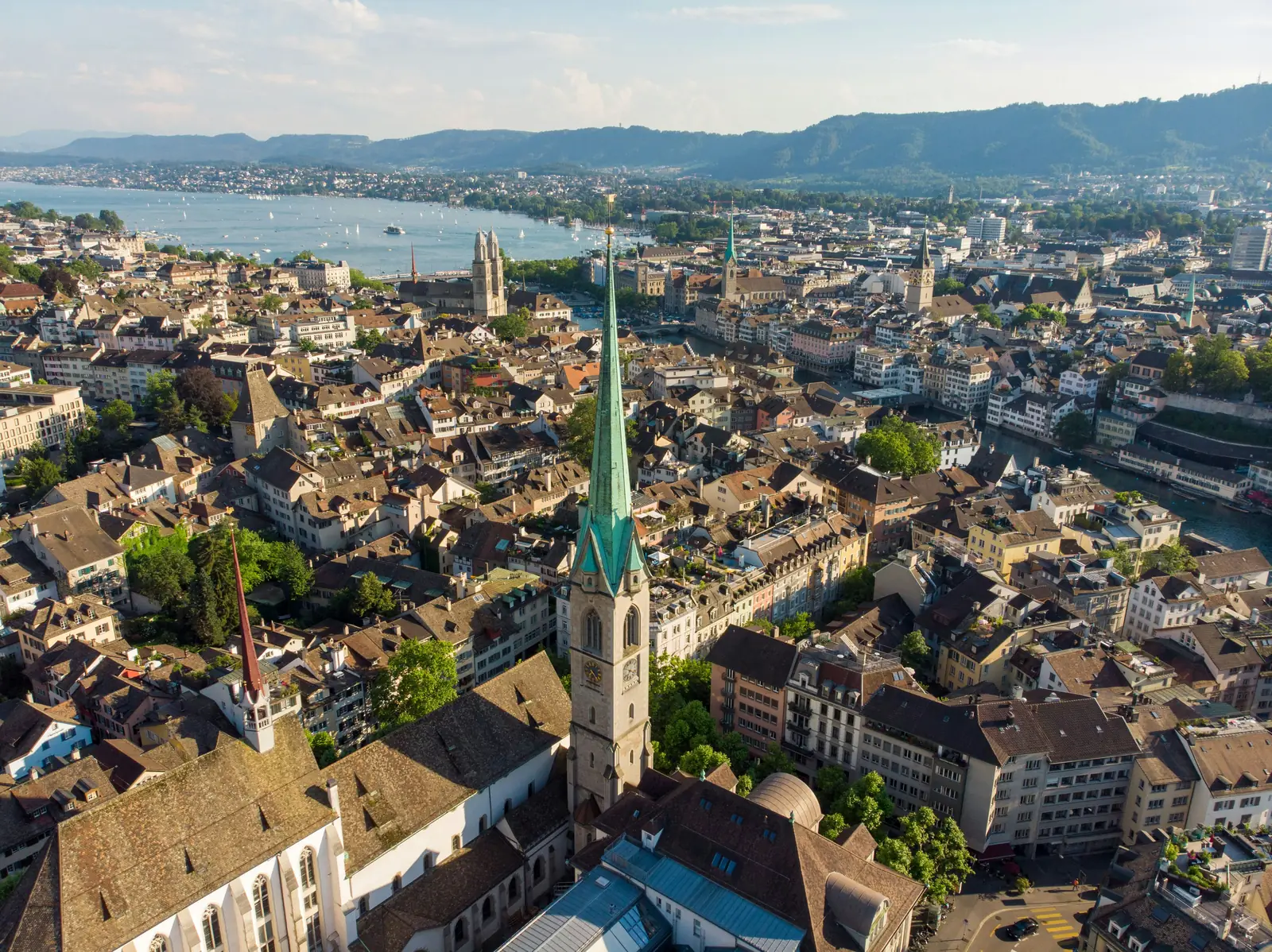
Switzerland has no federal wealth tax, but every canton and its communes tax the net wealth of their residents each year. As a new resident you are taxed on your worldwide assets minus debts, at rates set by your canton and commune, so the same fortune can be taxed quite differently in Zug, Geneva or Lucerne. If you are taxed on a lump sum instead, each canton has its own method for covering wealth tax.
Key facts (as of September 2026)
- Wealth tax is cantonal and communal only; there is no federal wealth tax.
- Residents are taxed on net worldwide wealth (assets minus debts).
- Rates are mostly progressive; flat rates apply in LU, UR, SZ, OW, NW, GL, AI, SG and TG.
- In 2025 the threshold at which wealth tax starts (married, no children) ranged from CHF 51,000 to CHF 410,000 by canton.
- Under the lump sum, each canton decides how wealth tax is covered.
- Capital gains on private securities and other movable assets are tax-free.
How Swiss wealth tax works
Wealth tax is often the least familiar part of the Swiss system for new arrivals. A few principles help:
- Who levies it. Only the cantons and communes. The Confederation taxes income, not wealth (ESTV, Geltende Steuern, legal status 1 January 2026).
- What is taxed. Your net wealth: assets such as securities, bank deposits, real estate and other valuables, minus debts. As a resident with unlimited tax liability, your wealth is assessed on a worldwide basis.
- Foreign real estate. How property abroad is treated depends on the allocation rules and the relevant double tax treaty. It is a point to confirm for your own situation rather than assume.
- Rate structure. Most cantons use progressive rates. Nine cantons use a flat rate (see below).
- Threshold. Every canton exempts a first slice of wealth, but the level varies widely.
Wealth tax usually works alongside income tax. The two are assessed together in the annual return, so the overall picture depends on your whole situation, not on the wealth tax rate alone.
Flat-rate and progressive cantons
The federal tax administration lists nine cantons with a flat-rate wealth tax: Lucerne, Uri, Schwyz, Obwalden, Nidwalden, Glarus, Appenzell Innerrhoden, St. Gallen and Thurgau. The others mostly use progressive rates, so the rate rises with the size of the fortune.
A flat rate does not automatically mean a lower bill, and a progressive rate does not automatically mean a higher one. Communal rates, the starting threshold and your income all play a part. Comparing cantons properly means running your own figures.
When wealth tax starts: the threshold
Every canton exempts a first slice of wealth. For a married couple without children, the level at which wealth tax started in 2025 ranged from CHF 51,000 to CHF 410,000, depending on the canton (ESTV, Geltende Steuern). For the families we typically work with, the threshold is rarely decisive; the rate applied to the rest of the fortune matters much more.
Wealth tax under the lump sum
If you qualify for lump-sum taxation, you are not assessed on your actual worldwide wealth in the ordinary way. Instead, each canton covers wealth tax in its own way (ESTV cantonal fact sheets, February 2026). We describe the methods in detail in lump-sum taxation by canton.
Two points apply everywhere:
- The control calculation at cantonal level includes gross Swiss wealth items: Swiss real estate, movable property in Switzerland and capital invested in Switzerland (art. 6 para. 6 StHG). Large Swiss assets can therefore push the base up.
- In the five cantons that abolished the lump sum (Zurich, Schaffhausen, Appenzell Ausserrhoden, Basel-Stadt, and Basel-Landschaft outside the arrival year), everyone pays ordinary wealth tax.
Comparison: selected cantons
This table combines only published facts: whether the canton uses a flat rate (ESTV, Geltende Steuern, 1 January 2026) and how wealth is handled under the lump sum (ESTV cantonal fact sheets, February 2026). Wealth-tax rates themselves are not shown, because they depend on the commune and on your whole situation.
| Canton | Wealth-tax rate | Lump sum available? | Wealth under the lump sum |
|---|---|---|---|
| Geneva (GE) | Progressive | Yes | 10% surcharge on the base instead of wealth tax |
| Vaud (VD) | Progressive | Yes | Included in the CHF 415,000 minimum (15% surcharge) |
| Valais (VS) | Progressive | Yes | Deemed wealth at least 4× the base |
| Fribourg (FR) | Progressive | Yes | Deemed wealth at least 4× the base |
| Bern (BE) | Progressive | Yes | Only real estate located in canton Bern |
| Ticino (TI) | Progressive | Yes | Deemed wealth 5× the base |
| Graubünden (GR) | Progressive | Yes | Wealth equal to capitalised living costs, per cantonal practice |
| Zug (ZG) | Progressive | Yes | Deemed wealth at least 20× the base |
| Lucerne (LU) | Flat | Yes | Deemed wealth at least 20× the base |
| Schwyz (SZ) | Flat | Yes | Deemed wealth at least 20× the base |
| Nidwalden (NW) | Flat | Yes | At least 20× the base and at least CHF 8,000,000 |
| Obwalden (OW) | Flat | Yes | Deemed wealth at least 10× the base |
| St. Gallen (SG) | Flat | Yes | Deemed wealth 20× the base |
| Thurgau (TG) | Flat | Yes | Included in the minimum cantonal and communal tax of CHF 150,000 |
| Zurich (ZH) | Progressive | No, abolished | Ordinary wealth tax |
The full list of 26 cantons, with the lump-sum minimum bases, is in lump-sum taxation by canton. For two of the most-asked cantons, see the rows for Geneva and Zug.
How to read the comparison
A deemed wealth multiple is taxed at the canton's own wealth-tax rates, so "20× the base" in one canton and "20× the base" in another do not produce the same tax. And the income base itself differs by canton: Zug's minimum is CHF 500,000, Schwyz's CHF 600,000 and Lucerne's CHF 647,100 for 2026.
Under ordinary taxation, the choice between a flat-rate and a progressive canton matters more as wealth grows, but so do communal rates and income tax. That is why we compare cantons on a full projection, not on a single rate. Our lump-sum or ordinary taxation guide shows how the two systems compare.
Related wealth-based charges
Two other points often come up alongside wealth tax:
- AHV/AVS for non-employed residents. Social security contributions for people who do not work are based on wealth plus 20 times annual pension income. In 2026 they range from CHF 530 to a maximum of CHF 26,500 a year, reached at CHF 8.95 million (AHV/IV leaflet 2.03). They are owed until the reference age of 65.
- Capital gains. Gains on private movable assets such as securities and art are tax-free at federal and cantonal level. Gains on real estate are taxed by a separate cantonal tax.
Inheritance and gift tax is also cantonal; we cover it in inheritance and gift tax.
How we help
We model wealth and income tax for the cantons you are considering, under ordinary and, where you qualify, lump-sum taxation, and we confirm the treatment of foreign assets before you move. Start with our eligibility check to see which route and cantons fit your profile.
This guide is general information as of 30 September 2026; a ruling or specific advice is needed for your own situation.
Official sources
- ESTV — Geltende Steuern von Bund, Kantonen und Gemeinden (legal status 1 Jan 2026)
- ESTV — Cantonal fact sheets (Kantonsblätter), February 2026
- Fedlex — StHG art. 6 (lump-sum taxation, cantonal control calculation)
- EFD — Lump-sum taxation (cantons that abolished it)
- AHV/IV — Leaflet 2.03, contributions for non-employed persons (1 Jan 2026)
Frequently asked questions
Does Switzerland have a federal wealth tax?
No. Wealth tax is levied only by the cantons and communes. There is no wealth tax at federal level.
What wealth is taxed in Switzerland?
Residents are taxed on their net wealth, meaning assets minus debts, on a worldwide basis. The canton and commune apply their own rates. How foreign real estate is treated depends on allocation rules and the relevant tax treaty, so confirm it for your own situation.
Which Swiss cantons have a flat-rate wealth tax?
According to the federal tax administration, Lucerne, Uri, Schwyz, Obwalden, Nidwalden, Glarus, Appenzell Innerrhoden, St. Gallen and Thurgau use a flat rate. The other cantons mostly use progressive rates.
From what amount does Swiss wealth tax apply?
It depends on the canton. For a married couple without children, the threshold at which wealth tax started in 2025 ranged from CHF 51,000 to CHF 410,000.
Do lump-sum taxpayers pay wealth tax?
Each canton decides how wealth is covered under the lump sum. Geneva adds a 10% surcharge to the base, Vaud includes a surcharge in its minimum, Bern taxes only real estate in the canton, and many cantons tax a deemed wealth equal to a multiple of the base.
Are capital gains taxed in Switzerland?
Capital gains on private movable assets such as securities are tax-free at federal and cantonal level. Gains on real estate are taxed by a separate cantonal tax.
Not sure which route fits you?
Answer a few questions and see an indicative route in about two minutes. Nothing is sent unless you choose to write to us.