Moving to Switzerland from Germany: exit tax and lump sum
For Germans moving to Switzerland: the EU permit without work, Wegzugsbesteuerung under § 6 AStG, and why German income triggers the modified lump sum.
Last reviewed
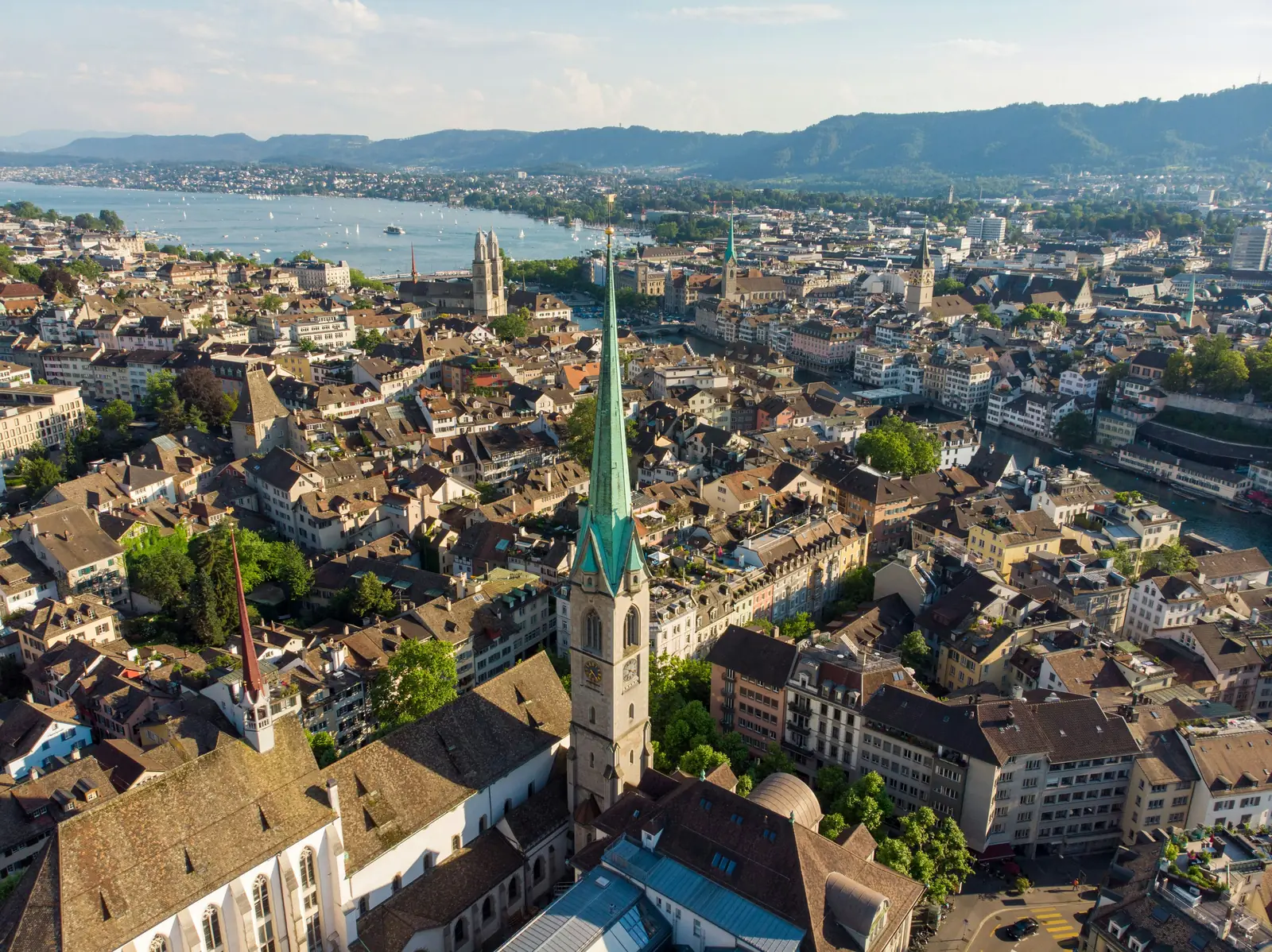
German citizens can settle in Switzerland without working under the EU free-movement agreement, as long as they have sufficient means and full health and accident insurance. Before leaving, check German exit tax (Wegzugsbesteuerung, § 6 AStG) if you hold 1% or more of a company. And if you plan to use the Swiss lump sum while keeping German income, expect the modified lump sum: under the Germany–Switzerland treaty, relief on German income is only available if all of it is taxed in Switzerland as under ordinary taxation.
Key facts (as of September 2026)
| Topic | What applies |
|---|---|
| Permit route | EU/EFTA free movement for non-employed people; no quotas |
| German exit tax | § 6 AStG: 7 of the last 12 years fully taxable in Germany, holding ≥1% (§ 17 EStG) |
| Exit tax payment | 7 equal annual instalments, usually against security |
| Swiss lump sum | Federal minimum base CHF 435,000 (2026); cantonal minimums vary |
| Modified lump sum | Required under the treaty with Germany if you claim treaty relief |
| Cantons without lump sum | Zurich, Schaffhausen, Appenzell Ausserrhoden, Basel-Stadt; Basel-Landschaft arrival year only |
| No inheritance or gift tax | Schwyz and Obwalden |
Living in Switzerland as a German national
German citizens enjoy the same free-movement rights as other EU nationals. If you are not going to work here, you need to show two things: that your resources are sufficient (above the Swiss social-assistance level, or above the supplementary-benefits threshold if you are retired) and that you have comprehensive health and accident insurance. There is no age requirement, no quota and no need for special ties to Switzerland.
The B EU/EFTA permit for non-employed people normally runs for five years, and German nationals can usually move to a C permit after five years. Registration with the commune is required, and health insurance must be taken out within three months of registering. The details of the application are in our guide to the EU B permit without work.
Wegzugsbesteuerung: German exit tax
§ 6 of the German Foreign Tax Act (AStG) is the rule to look at first if you own a significant stake in a company.
- Who: people who had unlimited German tax liability for at least 7 of the last 12 years.
- What: shares within the meaning of § 17 EStG, meaning holdings of at least 1% of a company's capital.
- Effect: moving abroad is treated as a sale at fair value, so latent gains become taxable even though nothing was sold.
- Payment: the tax can be paid in seven equal annual instalments, usually against security.
- Coming back: there is relief if you become German-resident again within seven years, subject to conditions.
The valuation, the security and the timing of your departure all need German advice. We usually ask clients to have that analysis done before we fix the Swiss arrival date, so both sides line up.
The Swiss lump sum and the modified lump sum
Lump-sum taxation (Pauschalbesteuerung or Besteuerung nach dem Aufwand) replaces tax on income and wealth with tax on your worldwide living costs. You must not be Swiss, you must be coming to Switzerland for the first time or after at least ten years away, and neither spouse may work in Switzerland.
Why Germany is different
Switzerland's treaty with Germany is one of seven (with Belgium, Italy, Norway, Canada, Austria and the USA) where a lump-sum taxpayer only gets treaty benefits if all income from that country is taxed in Switzerland as under ordinary taxation. In practice:
- all German-source income is added to the lump-sum base;
- it is taxed at the rate that applies to your total income;
- if you do not provide complete data, the maximum rate applies.
This is the modified lump sum (modifizierte Pauschalbesteuerung). Under these seven treaties, lump-sum taxpayers may also have access to the flat-rate foreign tax credit, which they otherwise cannot claim. Some cantons ask about it directly: Uri's application checklist asks whether you claim treaty relief from Germany or the other six countries. If you receive German pensions, rental income or dividends, the modified calculation deserves a careful look before you decide between the lump sum and ordinary taxation. Our guide to modified lump-sum tax and treaties explains it step by step.
German-speaking cantons compared
Minimum bases for cantonal and communal tax differ a great deal, and so does wealth treatment. The federal base of CHF 435,000 applies everywhere on top.
| Canton | Cantonal minimum base | Wealth-tax treatment |
|---|---|---|
| Zug | CHF 500,000 | Wealth at least 20× the base |
| Schwyz | CHF 600,000 | Wealth at least 20× the base |
| Lucerne | CHF 647,100 (2026) | Wealth at least 20× the base |
| Bern | CHF 400,000 | Wealth tax only on real estate in canton Bern |
| Graubünden | CHF 435,000 (2026) | Wealth equal to capitalised living costs |
| St. Gallen | CHF 600,000 | Wealth 20× the base |
| Thurgau | At least 10× rent; minimum cantonal and communal tax CHF 150,000 | Included in the minimum tax |
| Nidwalden | CHF 400,000 | At least 20× the base and at least CHF 8 million |
Source: ESTV cantonal fact sheets, February 2026. Our full lump-sum taxation by canton table covers every canton.
Zurich, Schaffhausen, Appenzell Ausserrhoden and Basel-Stadt no longer offer the lump sum, and Basel-Landschaft only allows it for the year of arrival. If you want to live in or near Zurich, the options are ordinary taxation there or a neighbouring canton such as Zug or Schwyz.
Inheritance, wealth and social security
- Inheritance and gift tax are cantonal. Spouses are exempt everywhere and children in most cantons. Schwyz and Obwalden levy neither tax. Lucerne has no gift tax, but gifts within five years of death are added back, and only its communes may tax descendants.
- Wealth tax is cantonal only. Nine cantons, including Lucerne, Schwyz, Nidwalden and St. Gallen, apply a flat rate.
- Capital gains on private movable assets, such as shares held privately, are tax-free in Switzerland.
- AHV/AVS contributions are owed by non-employed residents until age 65, based on wealth plus 20 times annual pension income: from CHF 530 to CHF 26,500 a year in 2026.
How your German pensions are taxed once you live in Switzerland depends on the type of pension and the treaty; we coordinate that question with your German adviser rather than generalise here.
Common pitfalls
- Ignoring § 6 AStG because the company is small. The 1% threshold is low.
- Assuming the lump sum covers German income. With the modified lump sum, it is added in full.
- Choosing Zurich for the lump sum. It was abolished there in 2010.
- Working a little. A paid board seat in Switzerland is gainful activity and ends eligibility.
How we help
We compare cantons with you, model the lump sum against ordinary taxation with your German income included, prepare the ruling request and permit file, and work alongside your German adviser on exit tax. See our European Union page, our tax ruling service or start with the eligibility check.
This guide is general information as of 30 September 2026 and is not tax or legal advice; your situation needs a cantonal ruling and advice from a German adviser.
Official sources
- SEM — Weisungen VFP (free movement, January 2026)
- Gesetze im Internet — § 6 AStG
- Fedlex — art. 14 DBG (lump-sum taxation)
- ESTV — Circular 44 (lump-sum taxation)
- ESTV — Rundschreiben 2-215-D-2025 (2026 indexation)
- Canton of Uri — Merkblatt Aufwandbesteuerung (1 January 2026)
- ESTV — Cantonal fact sheets (Kantonsblätter, February 2026)
- EFD — Lump-sum taxation
- ESTV — Geltende Steuern (legal status 1 January 2026)
- AHV/IV — Leaflet 2.03 contributions for non-employed persons (2026)
Frequently asked questions
Can Germans live in Switzerland without working?
Yes. Under the EU–Swiss free-movement agreement, non-employed people such as retirees and people of independent means can live in Switzerland with their family if they have sufficient financial means and comprehensive health and accident insurance.
What is Wegzugsbesteuerung?
It is German exit tax under § 6 AStG. If you were fully taxable in Germany for at least 7 of the last 12 years and hold at least 1% of a company, leaving Germany is treated as a sale of those shares at fair value. The tax can be paid in 7 annual instalments, usually against security.
What is the modified lump sum for Germany?
Under the Germany–Switzerland treaty, a lump-sum taxpayer only gets treaty benefits on German income if all income from Germany is taxed in Switzerland as under ordinary taxation. That income is added to the base and taxed at the rate for total income.
Which cantons have no inheritance or gift tax?
Schwyz and Obwalden levy neither inheritance nor gift tax. Lucerne levies no gift tax, but gifts made within five years of death are added back. Spouses are exempt in every canton.
Is lump-sum taxation available in Zurich?
No. Zurich abolished it with effect from 1 January 2010. Schaffhausen, Appenzell Ausserrhoden and Basel-Stadt have also abolished it, and Basel-Landschaft allows it only for the arrival year.


Not sure which route fits you?
Answer a few questions and see an indicative route in about two minutes. Nothing is sent unless you choose to write to us.