Moving to Zurich: no lump-sum tax, what remains (2026)
Zurich abolished lump-sum taxation in 2010, so new residents are taxed ordinarily. Permits for non-EU nationals, inheritance, property and living, 2026.
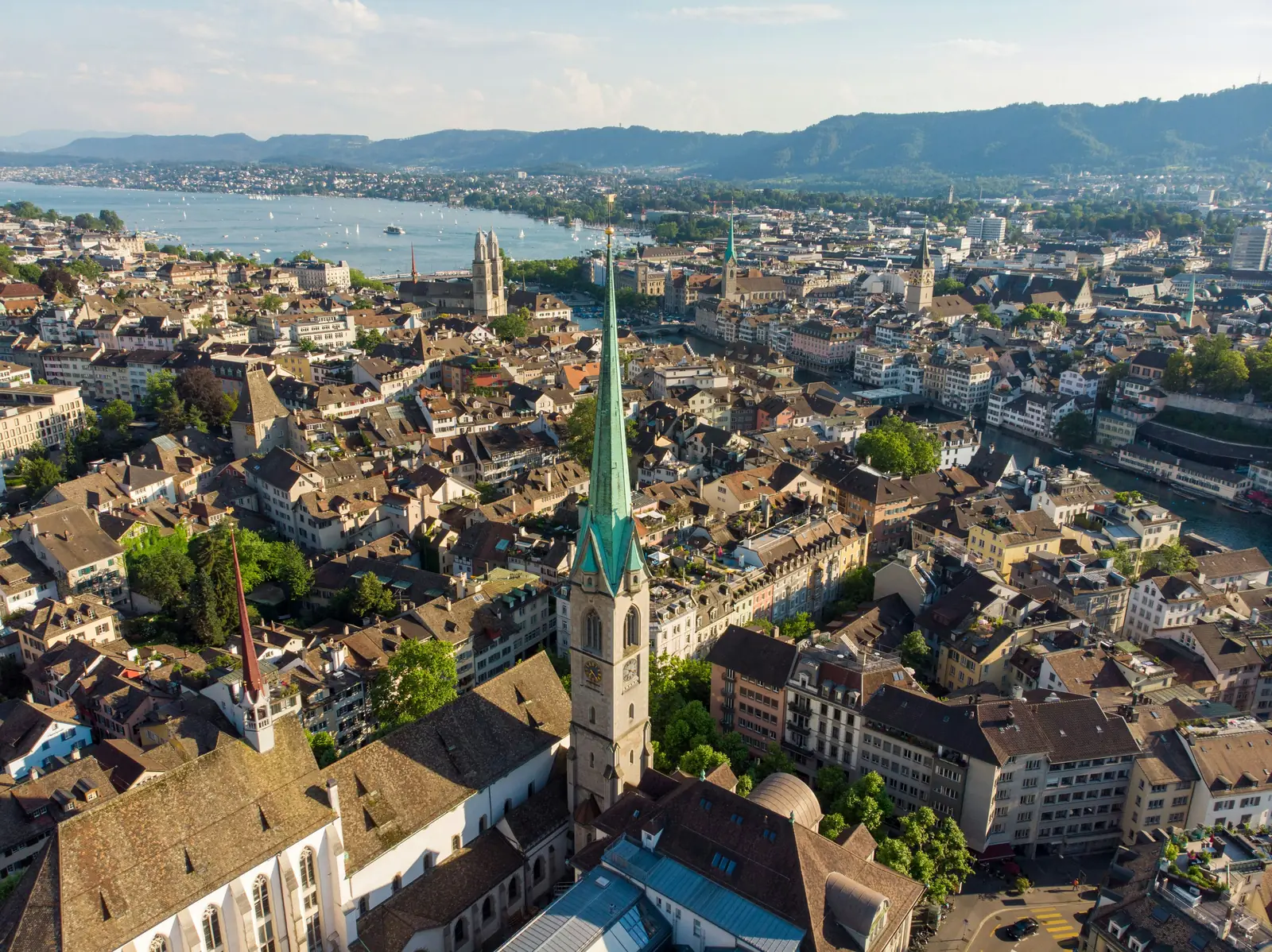
Zurich no longer offers lump-sum taxation. Voters abolished it on 8 February 2009, with effect from 1 January 2010, so anyone moving to the canton today is taxed under the ordinary system on income and wealth. Zurich can still be the right choice, especially for families who plan to work, invest actively or simply want to live in Switzerland's largest city.
Key facts
| Zurich (as of September 2026) | |
|---|---|
| Lump-sum taxation | Abolished (vote 8 Feb 2009, effective 1 Jan 2010) |
| How you are taxed | Ordinary taxation of income and wealth |
| Non-EU fiscal-interest permit | Annual tax of about CHF 1 million, confirmed by the tax authority |
| Capital gains on private securities | Tax-free (Swiss rule) |
| Inheritance (spouse, descendants) | Exempt |
| Property transfer tax | None (only land-register and notary fees) |
| Language | German |
| Main towns | Zurich, Winterthur, Uster, Dübendorf, Küsnacht |
Zurich at a glance
Zurich is Switzerland's economic centre, set at the northern end of Lake Zurich with the country's main international airport a short train ride away. The canton reaches from the city and its lake shores to Winterthur and the rural Weinland and Oberland. Daily life is in German, though English is widely used in business.
Lump-sum taxation: abolished
The federal finance department lists five cantons that abolished the regime: Zurich, Schaffhausen, Appenzell Ausserrhoden, Basel-Stadt and Basel-Landschaft (where it now applies only for the year of arrival). The federal tax administration's current fact sheet for Zurich contains no lump-sum section.
That means your Zurich tax bill is based on your actual worldwide income and net wealth, like any resident. There is no expenditure-based alternative, and no minimum base to negotiate.
If the lump sum matters to you, nearby Zug, Schwyz and Lucerne all offer it. Our guide to lump-sum taxation by canton compares them.
What remains: ordinary taxation
Ordinary taxation is not necessarily a drawback. It suits people who want to work in Switzerland, sit on Swiss boards, or whose income is modest relative to their lifestyle. A few Swiss-wide rules help: gains on private movable assets such as securities are tax-free at federal and cantonal level, and there is no federal wealth tax. See lump-sum or ordinary taxation for the trade-offs.
Zurich's tax office can give a written advance ruling on a concrete set of facts that is actually about to happen. It will not answer hypothetical planning questions.
Residence permits for non-EU nationals
EU/EFTA nationals who do not work can settle with sufficient means and health insurance. For non-EU nationals, Zurich's migration office considers the fiscal interest sufficient at an annual tax of about CHF 1 million. The tax authority must confirm the expected amount, and the applicant needs close ties to the canton and must relocate the whole family. The canton decides at its discretion, and SEM must approve. Applicants aged 55 or over with special ties to Switzerland and sufficient means, who do not work, can also apply as retirees; that route is also discretionary and needs SEM approval.
Inheritance and gift tax
Spouses, registered partners and direct descendants are exempt from inheritance and gift tax in Zurich.
Property
Zurich levies no real property transfer tax; buyers pay land-register and notary fees. EU/EFTA nationals living in Switzerland and C-permit holders buy freely; a non-EU B-permit holder can buy a main home where they actually live, without a Lex Koller permit. A 2026 consultation proposes stricter rules for non-EU buyers; it is a proposal, not law.
Living in Zurich
Families often look at the "Gold Coast" on the lake's eastern shore (Küsnacht, Zollikon, Erlenbach, Meilen), at Kilchberg and Rüschlikon on the western shore, or at the city's residential districts on the Zürichberg. Zurich has several international schools alongside the public system. For a wider comparison, see the best cantons for wealthy families.
How we help
We can model ordinary taxation in Zurich against a lump sum in a neighbouring canton, and prepare the tax confirmation and permit file if Zurich is your choice. Start with our eligibility check.
This page is general information as of 30 September 2026; your own situation needs a tax ruling and individual advice.
Official sources
- EFD — Lump-sum taxation (cantons that abolished it)
- ESTV — Cantonal fact sheet Zurich (Feb 2026)
- ESTV — Cantonal fact sheet Basel-Landschaft (Feb 2026)
- Canton of Zurich — Migration office directive (19 Nov 2021)
- Canton of Zurich — Tax manual ZStB 106.2 (rulings)
- ESTV — Geltende Steuern (legal status 1 Jan 2026)
- SEM — Directives on foreign nationals (AIG)
- Federal Office of Justice — Acquisition of real estate by persons abroad
- Canton of Zurich — official website
Frequently asked questions
Does Zurich offer lump-sum taxation?
No. Zurich voters abolished it on 8 February 2009, with effect from 1 January 2010. New residents are taxed under the ordinary system on income and wealth.
Can a wealthy non-EU national still get a permit in Zurich?
Possibly. Zurich's migration office considers the fiscal interest sufficient at an annual tax of about CHF 1 million, confirmed by the tax authority, with close ties to the canton and relocation of the whole family. SEM must approve.
Are capital gains taxed in Zurich?
Gains on private movable assets such as securities are tax-free at federal and cantonal level across Switzerland. Real-estate gains are taxed separately.
Do children pay inheritance tax in Zurich?
No. Spouses, registered partners and direct descendants are exempt.
Which nearby cantons still offer the lump sum?
Zug, Schwyz and Lucerne offer it, each with its own minimum base. Schaffhausen, Appenzell Ausserrhoden and Basel-Stadt have abolished it, and Basel-Landschaft allows it only for the year of arrival.
Ready to talk about your move?
Tell us a little about your plans. We will come back to you personally, usually within one working day.